Download The Zohar: Pritzker Edition, Vol. 1, by Daniel C. Matt
Simple way to obtain the incredible book from experienced author? Why not? The method is very straightforward if you obtain guide right here. You require just the book soft files here. It is based upon the links that are released in this site. By checking out the link, you can acquire guide directly. And also below, you will certainly learn several kinds of guides composed by the professional writers from all globe areas.
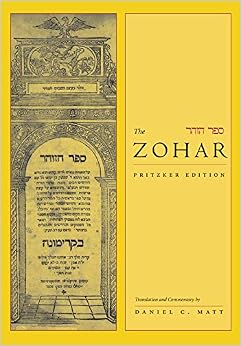
The Zohar: Pritzker Edition, Vol. 1, by Daniel C. Matt

Download The Zohar: Pritzker Edition, Vol. 1, by Daniel C. Matt
Maintain move on to see exactly what you can do more. Still have no concept? We both make sure that everybody has different methods and quality in undergoing their life. Nonetheless, the objective will be generally as the exact same. Several will need to get the new dialogues to obtain the acknowledgement. Nevertheless, in providing details, it will limit on the resources. In this manner can supply the false impression system for connecting.
Checking out tends to be extremely dull task to do; some individuals may say regarding it. However, reviewing in fact will provide the visitors numerous advantages. It's not just the lesson or understanding; much entertainment can be likewise gained from checking out publication. Yeah, there are many sort of publications as well as a few of them are the fictions. The book to read will obviously depend on exactly how you wish to get the impression of guide. Thus, we share The Zohar: Pritzker Edition, Vol. 1, By Daniel C. Matt as one of the material to review. It needs to be among referred publications in this suggested internet site.
You can acquire the book by visiting to the link page of the book. It will not be understood when you do not download the application. And after that, you can save it to the tool. You understand, as the developed and advanced innovation in these recent years, the activities and all points can be done by applying or making use of the technology. This is as just what to do to obtain The Zohar: Pritzker Edition, Vol. 1, By Daniel C. Matt in the soft documents. You have to attach to the net as a very common thing today.
After finishing this publication, you can take the final thought about exactly what type of publication this is exactly. You could not feel remorse to get as well as read it until finished. Many individuals have confirmed it and they enjoy this book so much. When they have actually reviewed it already, one comment concerning The Zohar: Pritzker Edition, Vol. 1, By Daniel C. Matt is outstanding. So, how is about you? Have you began reading this book? Complete it and also make verdict of it. Beginning it now as well as below.
Review
"At last, we have an authoritative version of one of the most significant, misunderstood, brilliant, difficult texts in the whole of the Jewish tradition, a translation that fulfills the wishes and scholars and seekers alike." (The Forward)"Daniel Matt's landmark translation of the Zohar from the original tongues into English is a tour de force of scholarship and linguistic imagination―in the service of heaven." (Laurance Wieder University of Virginia in Charlottesville)"While translation may be an art, it can also be genuine scholarship of the highest order. . . . Restoring the Zohar to our comprehension, these volumes are a monumental contribution to the history of Jewish thought." (Koret Jewish Book Award,Philosophy and Thought 2003-2004,The Zohar: Pritzker Edition, Volumes I and II)"Daniel Matt's translation of, and commentary to, the Zohar is a powerfully poetic rendition of this spiritual masterpiece. It is a book to be studied, not read. As one who has pondered and taught the Zohar for many years, I found Matt's interpretation learned, insightful, and very beautiful. Often, his translation and commentary changed my understanding of passages I thought I had already mastered." (David R. Blumenthal Journal of the American Academy of Religion)"[Matt's] text is the most authoritative English translation and the only English edition that goes directly to the source, unearthing many of the major surviving manuscripts of the original language." (Library Journal)"Pinchas of Koretz once said that the Zohar saved his soul, and a great many other Jews down through the centuries would agree. The Zohar was considered by many pious Jews to be part of the holy triad by which they lived: the Bible, the Talmud, and the Zohar. And so it is good to have it accesible to a new generation of Jews, who will learn much from it, if they are willing to confront it, to wrestle with it, and to engage in the study of it with mind and soul." (Rabbi Jack Riemer)"Slow and meticulous study of the original text along with Matt's brilliant translation and extensive commentary will prove ultimately rewarding. The Pritzker Edition should find its place in any serious Judaica library together with all of the other major texts of Judaism." (Paul Howard Hamburg Associaition of Jewish Libaries)"...Thanks to Matt's achievement the English reader is able, for the first time, to appreciate the depth and complexity of this innovative and, at the same time, canonical mystical text." (Journal of Jewish Studies)"A powerfully poetic rendition of this spiritual masterpiece. . . . Matt's new Zohar is a classic already in its first two volumes. The edition alone, or the translation alone, or the commentary alone would be a major contribution. The whole is a work of art." (Journal of the American Academy of Religion)"More than a translation, this projected twelve-volume Pritzker edition amounts to an encyclopedia of the Zohar and is set to become one of the single most important contributions to the topic in teh English-speaking world." (Times Liiterary Supplement)
Read more
From the Inside Flap
The first two volumes of The Zohar: Pritzker Edition, translated with commentary by Daniel C. Matt, cover more than half of the Zohar’s commentary on the Book of Genesis (through Genesis 32:3). This is the first translation ever made from a critical Aramaic text of the Zohar, which has been established by Professor Matt based on a wide range of original manuscripts. The extensive commentary, appearing at the bottom of each page, clarifies the kabbalistic symbolism and terminology, and cites sources and parallels from biblical, rabbinic, and kabbalistic texts. The translator’s introduction is accompanied by a second introduction written by Arthur Green, discussing the origin and significance of the Zohar. Please see the Zohar Home Page for ancillary materials, including the publication schedule, press release, Aramaic text, questions, and answers.Further information on the Zohar:Sefer ha-Zohar, "The Book of Radiance," has amazed and overwhelmed readers ever since it emerged mysteriously in medieval Spain toward the end of the thirteenth century. Written in a unique Aramaic, this masterpiece of Kabbalah exceeds the dimensions of a normal book; it is virtually a body of literature, comprising over twenty discrete sections. The bulk of the Zohar consists of a running commentary on the Torah, from Genesis through Deuteronomy. This translation begins and focuses here in what are projected to be ten volumes. Two subsequent volumes will cover other, shorter sections.The Zohar’s commentary is composed in the form of a mystical novel. The hero is Rabbi Shim’on son of Yohai, a saintly disciple of Rabbi Akiva who lived in the second century in the land of Israel. In the Zohar, Rabbi Shim’on and his companions wander through the hills of Galilee, discovering and sharing secrets of Torah.On one level, biblical figures such as Abraham and Sarah are the main characters, and the mystical companions interpret their words, actions, and personalities. On a deeper level, the text of the Bible is simply the starting point, a springboard for the imagination. For example, when God commands Abraham, Lekh lekha, Go forth... to the land that I will show you (Genesis 12:1), Rabbi El’azar ignores idiomatic usage and insists on reading the words more literally than they were intended, hyperliterally: Lekh lekha, Go to yourself! Search deep within to discover your true self.At times, the companions themselves become the main characters, and we read about their dramatic mystical sessions with Rabbi Shim’on or their adventures on the road, for example, an encounter with a cantankerous old donkey driver who turns out to be a master of wisdom in disguise.Ultimately, the plot of the Zohar focuses on the ten sefirot, the various stages of God’s inner life, aspects of divine personality, both feminine and masculine. By penetrating the literal surface of the Torah, the mystical commentators transform the biblical narrative into a biography of God. The entire Torah is read as one continuous divine name, expressing divine being. Even a seemingly insignificant verse can reveal the inner dynamics of the sefirot—how God feels, responds and acts, how She and He (the divine feminine and masculine) relate intimately with each other and with the world.
Read more
See all Editorial Reviews
Product details
Series: The Zohar: Pritzker Edition (Book 1)
Hardcover: 584 pages
Publisher: Stanford University Press; 1st edition (October 28, 2003)
Language: English
ISBN-10: 0804747474
ISBN-13: 978-0804747479
Product Dimensions:
7 x 1.5 x 10 inches
Shipping Weight: 2.7 pounds (View shipping rates and policies)
Average Customer Review:
4.6 out of 5 stars
56 customer reviews
Amazon Best Sellers Rank:
#195,847 in Books (See Top 100 in Books)
When I purchased this book two years ago, I was pursuant of the many many mysteries of creation, ranging from the physics and science of the matter as part of my grad school education to all sorts of spiritual and religious viewpoints as well. So this has taken me to various schools of thought but I have found Kabbalah and the interpretation of the Creation found here to be extremely profound in both spiritual and intellectual fulfillment. I do hope to read the other volumes of Matt's translation when money becomes more available to purchase additional volumes (for those who want a full set, the KCI has theirs for 72 dollars for all 23 volumes of its translation at the moment with the Aramaic text included).For my review I will just focus on a few points that should help the potential buyer into getting this edition (if not this volume).1, The Zohar presented by Daniel Matt is set into its historical context with references regarding the supposed and actual timelines throughout the text. This includes references to the Talmud along with parallels with the New Testament, other Kabbalistic texts such as Sefer Yetzirah, and important or relevant Rabbis of the time. He does not provide commentary in terms of interpreting the text as you would find from the KCI edition but rather helps the reader discern the original meaning. So that means the insights of the Ari (Isaac Luria) and other Kabbalists after the supposed date of its production (via Moses de Leon in the 13th or so centuries) will not be found when not relevant to the meaning of the text as itself.2. The book as it stands with its introduction is a perfect gateway for those who are interested in Jewish mysticism. What you will find here is a presentation of the unique interpretations the Zohar provides regarding the Torah, and this volume the first 16 chapters of Genesis. Now what is interesting is that the Zohar provides insights (which Daniel Matt makes clear through his wondrous commentary) via ingenious word play and parallel allusions from throughout the Tanakh, which lends credence to the idea that the Word of God is eternal and applies throughout every instant of creation. What I mean by this is that the interpreters, such as Rabbi Shimon bar Yochai and those with him, use verses and texts from the Prophets and Psalms of David along with the rest of the Tanakh, when explaining esoteric meanings found throughout Genesis, especially during the foundation of creation. So while we might take that to be more about retrospective interpretation, it's more of an encounter with the Timeless reality of the Creator, whose Word and actions reverberate in all instants and every instant.3. When it comes to explaining the Creation, the understanding of the first chapters of Genesis, you find in this translation lucid commentary that helps the person discern the greatness and yet "confusion" of the Creator. What does that mean, it's to indicate how profound are the ways of the Lord above our own. The metaphors and analogies posed throughout seem to be just mere word play or nonsense but that means this knowledge is not for the many. For example, the discussion on the 2nd day of creation is very profound. Compared to the other days, the separation of the firmament was not mentioned by God as "good." I won't go on about the interpretation here via the Zohar but the reader will find a beautiful extrapolation (if not recover the "true" meaning of the words) of this verse.To end, I summarize my main points: The Zohar as translated by Daniel Matt is as close anyone may get to a pre-digested text with references only to the immediate data and allusions found in the text's immediate history without any interpretations from later Kabbalists. It provides a grand foundation for adventuring into Jewish Mysticism with the amount of commentary and references found throughout (not to mention his other book on Kabbalah). And lastly, the wording is fluid and presented in the best of his ability to translate the words of the Zohar (which have some textual anomalies if one is to believe the mystical origin of the work). I believe. Dr. Matt is nearly finished with his work, needing a couple of volumes left by now. For me, this has been a great and profound book regarding the creation in Genesis.
This book is not for the faint-hearted! It's heady stuff, and presented in an extremely scholarly manner. Which I think makes it an exceptional resource on the Zohar. But I would suggest that you have some introduction to the Kabbalah before weighing in on this. It IS presented in a very respectful manner, which requires patience and time to absorb.
The seminal first of three volumes of a projected 12-volume annotated English translation by noted world-class scholar Daniel C. Matt and Stanford University Press. The first cloth volume is 536 pages and covers just the first 16 chapters of Genesis. Matt based in Berkley and Jerusalem has unearthed many of the major surviving manuscripts of the original language. The extensive commentary of the Aramaic text in not integrated into the volumes but available online and appears at the bottom of each page, clarifies the Kabbalistic symbolism and terminology and cites copious sources and parallels from biblical, rabbinic, and Kabbalistic texts. The translator's introduction is accompanied by a second introduction written by Arthur Green, discussing the origin and significance of the Zohar. This work has justifiably won the Koret Jewish Book Award for Philosophy and Thought, 2003-2004 for both The Zohar: Pritzker Edition, Volumes I and II.The Zohar ('Splendor, radiance') is accepted as the most important work of Kabbalah, Jewish mysticism and is one of the greatest hidden works of Judaism and Western culture. Revered next to the Torah and Talmud, the Zohar is not one book, but a span of awesome, esoteric literature, a Midrash, homily on the Torah written in the form of a mystical novel. In it a group of rabbis (the "Hevrah") wander through the hills of Galilee, discovering and sharing secrets of Torah, or teaching of the five books of Moses whose linguistic character is medieval or pseudo Aramaic and medieval Hebrew. A dazzling mystical dialectic of the nature of God, the origin and structure of the universe, the nature of souls, sin, redemption, good and evil, suffering and related topics present.The Zohar assumes four kinds of Biblical exegesis: Peshat ("simple/literal meaning"), Remez ("hint/allusion"), Derash ("interpretative/anagogical), and Sod ("secret/mystic"). The initial letters of these letters (P, R, D, S) form together the word PaRDeS ("Paradise/orchard"), which became the designation for the fourfold meaning of which the mystical sense is the highest part.The mystic allegory in the Zohar is based on the principle that all visible things, including natural phenomena, have both an exoteric, visible (Niglah) reality and an esoteric, hidden (Nistar) reality, the latter of which instructs Man in that which is invisible.This principle is the necessary fundamental doctrine of the Zohar. According to that doctrine, as the universe is a gradation of emanations, it follows that the human mind may recognize in each effect the supreme mark, and thus ascend to the cause of all causes. The Ein Sof, the Endless one.The Zohar first appeared in Spain in the 13th century, by a Jewish writer named Moses de Leon, which some scholars argue is a reaction to Maimonides rationalism. De Leon himself ascribed the Zohar to a rabbi of the second century Tannah, Shimon bar Yochai. The Talmud records Rabbi Shimon's true and rash words caused him to hide in a cave for 13 years studying the Torah with his son, Elazar. During this time he was inspired by Elijah the Prophet to write the Zohar. Scarcely fifty years had passed since its appearance in Spain before it was quoted by many Kabbalists, including the Italian mystical writer Menahem Recanati. Its authority was so well established in 15th century Sepharad that Joseph ibn Shem-Tov drew from it arguments in his attacks against Maimonidean rationalism. It is worth noting that most of the major Traditional Halachic authorities accept the Zohar as authentic and/or have written works on the Kabalah. This includes figures like R' Yosef Karo, R' Moses Isserles, R' Solomon Luria, R' Yechiel Michel Epstein, Rabbi Shneur Zalman of Liadi, The Vilna Gaon and R' Yisrael Meir Kagan.Yet the arguments of Elijah Delmedigo, in his Bechinat ha-Dat endeavored to show that it could not be attributed to Shimon bar Yochai. His objections were;1. If the Zohar was the work of Shimon bar Yochai, it would have been mentioned by the Talmud, as has been the case with other works of the Talmudic period and the Zohar contains names of rabbis who lived at a later period than that of Simeon;2. Were Shimon ben Yochai the father of the Kabbalah, knowing by divine revelation the hidden meaning of the precepts, his decisions on Jewish law would have been adopted by the Talmud earlier but this has not been done;3. Were the Kabbalah a revealed doctrine, there would have been no divergence of opinion among the Kabbalists concerning the mystic interpretation of the precepts (Bechinat ha-Dat ed. Vienna, 1833, p. 43).These arguments and others of the same kind were used by Leon of Modena in his Ari Nohem. A work devoted to the criticism of the Zohar was written, Mi'pa'at Sefarim, by Jacob Emden, who, waging a polemical war against the remaining adherents of the Sabbatai Zevi movement, endeavored to show that the book on which Zevi based his doctrines was a forgery. Emden persausively demonstrates that the Zohar misquotes passages of Scripture; misunderstands the Talmud; contains some ritual observances which were already ordained by later rabbinical authorities; mentions the crusades against the Muslims (who did not exist in the second century); uses the expression esnoga, which is a Portuguese term for "synagogue,"; and gives a mystical explanation of the Hebrew vowel-points, which were not introduced until long after the Talmudic period by the Masoretic Scribes.Yeshayahu Leibowitz, zl' the noted controversial professor of philosophy at the Hebrew University of Jerusalem, claimed that "It is clear that the Zohar was written by de Leon as it is clear that Theodore Herzl wrote Medinat HaYehudim ("A State for the Jews")."Bottom Line. Scholars can argue but Get it if you are a serious student or collector.Update:The Zohar is Canonically amazing and you can't buy a better translation and while a legitimate teacher is ideal for serious study, this is an excellent start. Daniel Matt's translation is massive and essentially not directed to the general reader. The Matt project is expensive, will take years to complete, and is geared for the specialist reader. There are few general readers who will fork out $55 per volume. The current huge undertaking of this series is currently at volume 7 and that only brings us partially through Leviticus - way less than half of the Zohar. The general reader who would be better off with Scholem and Tishbi. To place this translation in context, you can more easily and economically access the Kabbalah through the popular studies of Gershom Scholem and in an anthology of texts edited and translated by his student Isaiah Tishby called The Wisdom of the Zohar - still the best and most compact version of these texts along with Scholem's book of lectures Major Trends in Jewish Mysticism, the novice reader with no background in the mystical tradition can very quickly come to understand what it is all about.
This is great, because the scholarship is impeccable, and the commentary is rich, understandable, and enlightening.The Zohar is so large, and this is the best guide that I have read.Note: I'm not a scholar or academic, but a long-time student of religion with a pain-staking read-with-a-dictionary reading knowledge of Greek and Hebrew, and a weak knowledge of classical Latin.
A great book with in-depth study of Torah. Most remarkable book I have ever read. I have been greatly blessed by it. Thank you Daniel C. Matt, and especially the Pritzker's for such a worldly scholarly study that's pleasant to read.
The Zohar is an amazing collection of wisdom in multiple areas designed to give initiates what mystery schools used to provide.Not for the light reader or faint of heart. The wisdom forces one to reconsider one's views and to think. Not for the lazy reader who would just like to be entertained. Heavy reading, yet valuable insights.
The Zohar: Pritzker Edition, Vol. 1, by Daniel C. Matt PDF
The Zohar: Pritzker Edition, Vol. 1, by Daniel C. Matt EPub
The Zohar: Pritzker Edition, Vol. 1, by Daniel C. Matt Doc
The Zohar: Pritzker Edition, Vol. 1, by Daniel C. Matt iBooks
The Zohar: Pritzker Edition, Vol. 1, by Daniel C. Matt rtf
The Zohar: Pritzker Edition, Vol. 1, by Daniel C. Matt Mobipocket
The Zohar: Pritzker Edition, Vol. 1, by Daniel C. Matt Kindle

Tidak ada komentar :
Posting Komentar